

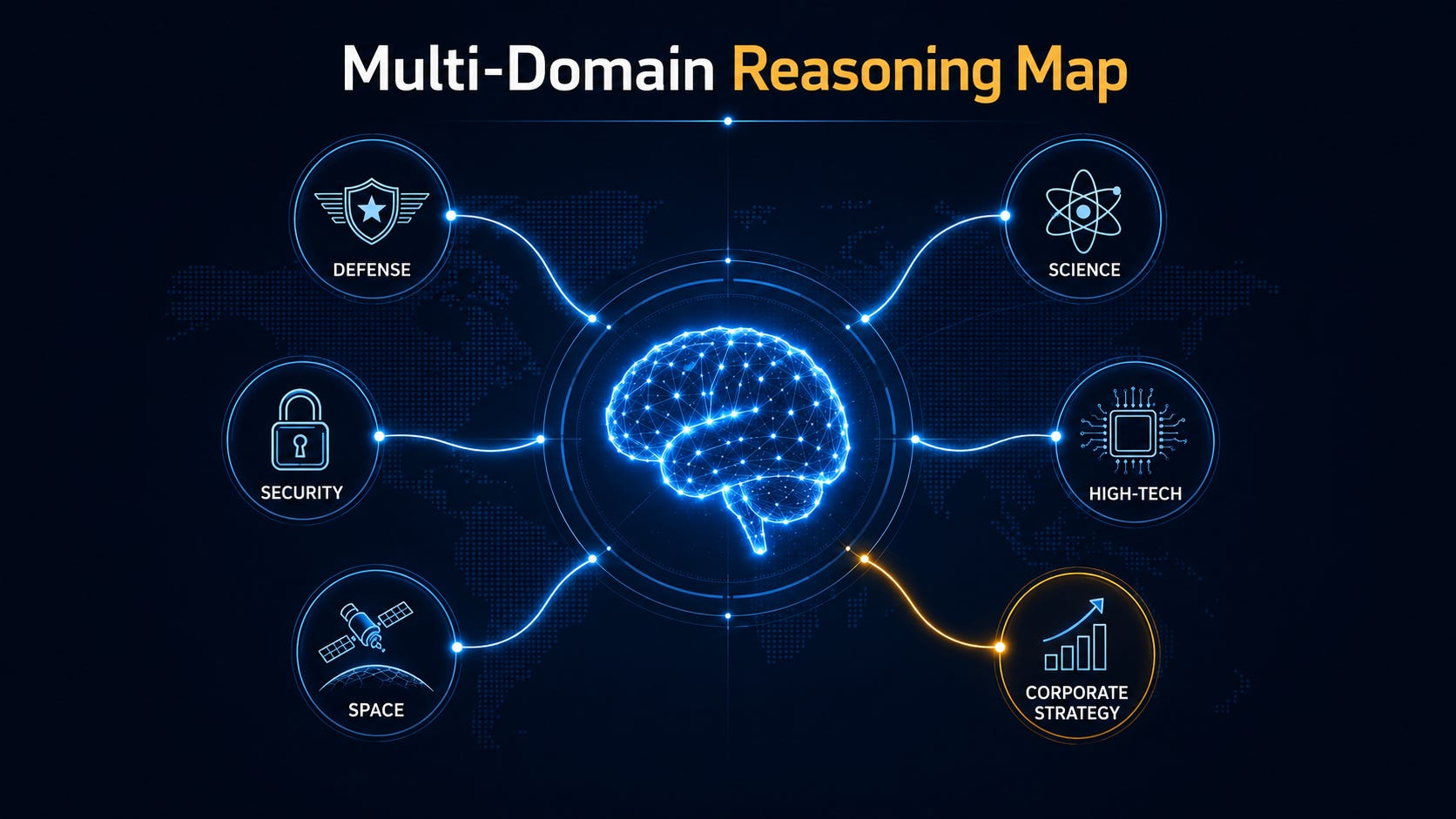
Figure 1 — BioNeuroCognitive Complex Reasoning for multi-domain superiority.
A conceptual representation of reasoning architectures operating across military, criminal, terrorist, spatial, scientific, high-tech, and corporate domains.
Artificial intelligence is usually discussed as automation.
That is too narrow.
Automation executes tasks.
Prediction estimates outcomes.
Optimization improves variables.
Generation produces content.
But reasoning does something deeper.
Reasoning links models, sub-models, hypotheses, constraints, evidence, objectives, context, uncertainty, and action into an adaptive sequence.
It does not merely answer.
It searches.
It infers.
It learns.
It corrects itself.
It adapts its own reasoning path.
This is the conceptual territory of Complex Reasoning Systems.
Not more data.
Not more dashboards.
Not more isolated agents.
Better reasoning architectures.
That is where the next frontier of artificial intelligence begins.
1. What is a Complex Reasoning System?
A Complex Reasoning System is a subdiscipline of artificial intelligence whose roots lie in BioNeuroCognitive reasoning systems and complex systems theory.
Its purpose is to connect structures of models, sub-models, and reasoning techniques in order to generate adaptive and evolutionary sequences of:
search,
inference,
learning,
correction,
decision,
and action.
In this sense, a Complex Reasoning System is not a single model.
It is a reasoning organism.
It can pursue self-imposed objectives, but also objectives defined by the intelligent ecosystem to which it belongs.
It can operate autonomously or under human supervision.
It can reason conventionally and non-conventionally.
And, at higher levels of maturity, it can generate emergent properties such as self-repair, self-preservation, and self-referential reasoning.
This distinction is essential.
A chatbot produces linguistic output.
A predictive system identifies statistical regularities.
A Complex Reasoning System organizes cognition as an operational architecture.
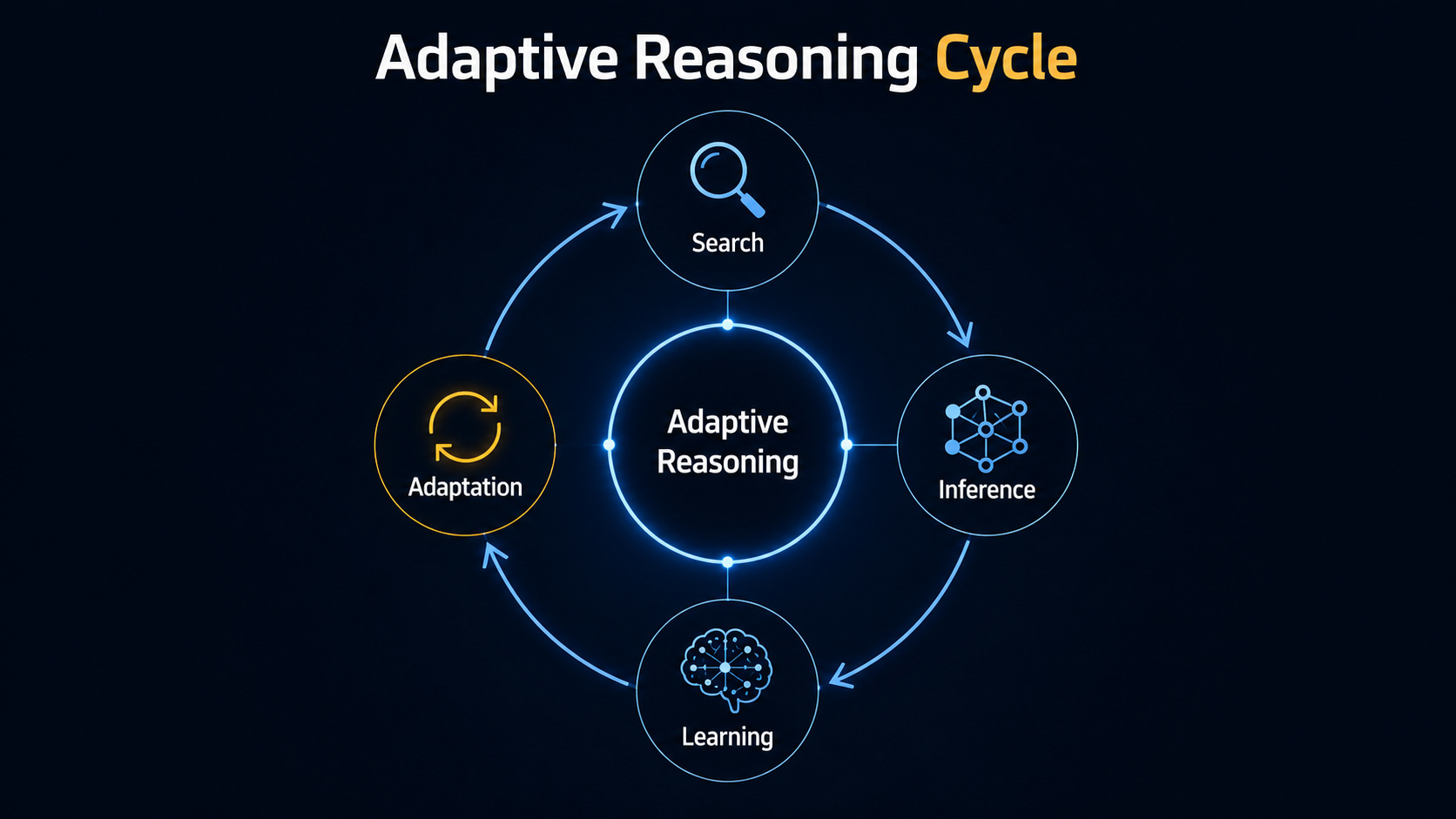
Figure 2 — The adaptive reasoning cycle.
Complex reasoning systems do not follow a linear workflow. They operate through recursive cycles of search, inference, learning, adaptation, and reconfiguration.
2. What is a Complex Reasoning Architecture?
A Complex Reasoning Systems Architecture is the structured set of agents, entities, models, reasoning modules, and intelligent resources that enable the inference sequences required to achieve a mission.
The mission may be military, criminal intelligence, counterterrorism, spatial, scientific, technological, corporate, or strategic.
The architecture must answer a practical question:
What reasoning entities are needed, in what sequence, under what constraints, with what resources, and with what degree of autonomy, to accomplish the mission in time?
This is where the engineering problem begins.
The challenge is not only to build an intelligent agent.
The challenge is to design an intelligent ecosystem capable of orchestrating many forms of reasoning at once.
Some reasoning processes must be fast.
Some must be explainable.
Some must be adversarial.
Some must be probabilistic.
Some must be strategic.
Some must be creative.
Some must be conservative.
Some must be supervised by humans.
Some must operate in real time.
The architecture must decide how these reasoning modes interact.
That is the difference between isolated artificial intelligence and operational reasoning infrastructure.
3. Hyperautomation is not enough
The next stage of automation is often called hyperautomation.
But most hyperautomation still remains procedural.
It accelerates workflows.
It connects tools.
It reduces manual intervention.
It automates repetitive processes.
That is useful.
But it is not sufficient for complex, ambiguous, adversarial, or mission-critical environments.
In these environments, the system must not only execute.
It must understand what kind of situation it is facing.
It must reason in real time.
It must detect changes in context.
It must generate hypotheses.
It must compare alternatives.
It must infer intentions.
It must assess consequences.
It must decide when to act and when not to act.
It must know when human supervision is required.
This is a different level of capability.
It is not hyperautomation as task acceleration.
It is reasoning-based hyperautomation.
Automation executes.
Reasoning understands why, when, and how execution should occur.
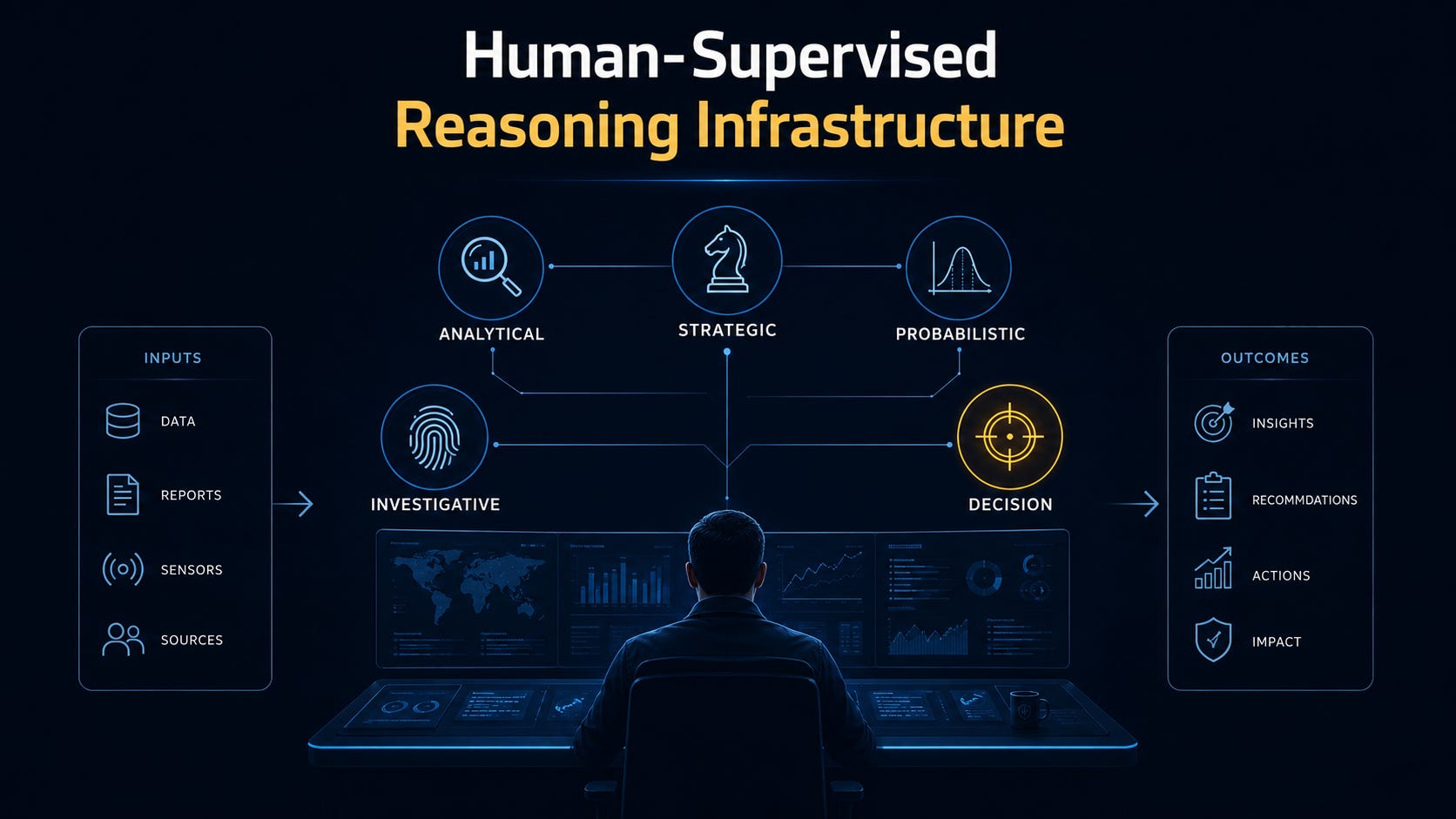
Figure 3 — Human-supervised reasoning infrastructure.
The objective is not to remove human control, but to augment human decision-making through real-time reasoning systems that can operate autonomously or collaboratively.
4. The taxonomy of complex reasoning
Complex Reasoning Systems are not based on one single reasoning method.
They require a taxonomy.
At the highest level, they may incorporate inductive, deductive, abductive, retroductive, and non-conventional reasoning models.
Beneath those models there are many sub-models.
For example:
analytical and synthetic reasoning,
argumentative reasoning,
deliberative reasoning,
situational reasoning,
analogical reasoning,
strategic reasoning,
investigative reasoning,
probabilistic reasoning,
predictive reasoning,
decisional reasoning,
counterfactual reasoning,
critical reasoning,
common-sense reasoning,
defeasible reasoning,
transition-state reasoning,
and reasoning in complex domains.
Each of these families can contain dozens or hundreds of specific techniques.
This matters because real-world intelligence problems do not present themselves in pure form.
A military problem is not only military.
It may also be political, technological, logistical, psychological, spatial, economic, and informational.
A corporate problem is not only financial.
It may involve strategic uncertainty, reputational risk, organizational behavior, adversarial dynamics, and technological change.
A scientific problem is not only technical.
It may require hypothesis generation, anomaly detection, abductive inference, model criticism, and probabilistic interpretation.
No single reasoning mode is enough.
Complexity requires orchestration.
5. Reasoning Boxes
The operational implementation of this approach can be understood through the concept of Reasoning Boxes.
A Reasoning Box is a modular reasoning capability designed to be integrated into mission-critical systems.
It is not a generic AI tool.
It is a specialized reasoning module capable of applying one or several reasoning models to a specific class of operational problems.
A Reasoning Box may support:
threat interpretation,
hypothesis generation,
scenario construction,
course-of-action analysis,
anomaly detection,
risk assessment,
decision support,
strategic anticipation,
or adaptive learning.
The key is that these boxes are not static automation components.
They reason.
They interact with other reasoning components.
They receive data from the environment.
They process context.
They generate inferences.
They adapt their behavior.
They can operate under supervision or partial autonomy.
This allows mission-critical systems to move beyond dashboards and workflows toward real-time cognitive capability.
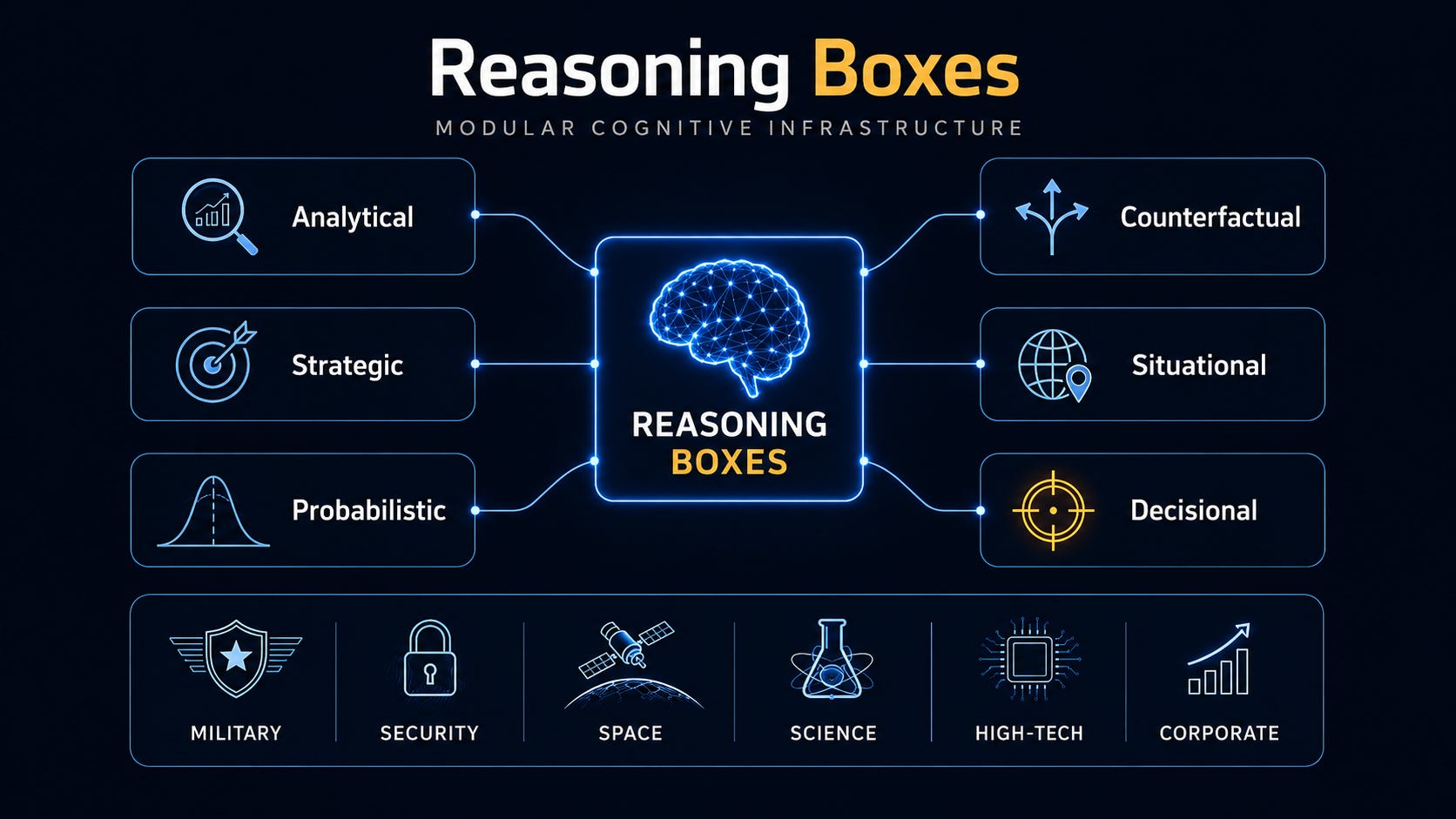
Figure 4 — Reasoning Boxes as modular cognitive infrastructure.
Each Reasoning Box encapsulates a family of reasoning techniques that can be deployed into specific operational environments.
6. Smartification
The integration of Complex Reasoning Systems into existing mission-critical platforms can be described as Smartification.
Smartification is not simple digitization.
Digitization converts processes into digital form.
Automation executes predefined workflows.
Smartification embeds reasoning capacity into the system itself.
A smartified system is able to interpret, infer, adapt, and act according to the evolving situation.
This is especially relevant in multi-domain environments.
Military, criminal, terrorist, spatial, scientific, high-tech, and corporate systems increasingly operate under similar conditions:
uncertainty,
speed,
deception,
fragmentation,
information overload,
cross-domain effects,
and limited time for decision.
The advantage will not belong only to those with more sensors, more data, or more computational power.
The advantage will belong to those who can reason better.
Faster, but not superficially.
Autonomously, but not blindly.
Adaptively, but not chaotically.
Under human control, but not limited by unaided human cognition.
That is the strategic meaning of Smartification.
7. Multi-domain superiority
The concept of superiority must also be redefined.
In industrial systems, superiority was often a matter of production.
In digital systems, it became a matter of information.
In AI systems, it is becoming a matter of reasoning.
Multi-domain superiority will depend on the ability to connect multiple forms of intelligence across multiple environments.
A system must be able to reason across physical, digital, cognitive, organizational, spatial, and strategic layers.
It must understand how events in one domain propagate into another.
A cyber event may produce logistical consequences.
A spatial signal may alter military posture.
A criminal pattern may indicate terrorist preparation.
A scientific discovery may become a high-tech corporate advantage.
A corporate weakness may become a geopolitical vulnerability.
Complex Reasoning Systems are designed for this kind of environment.
They do not treat domains as isolated compartments.
They reason across them.
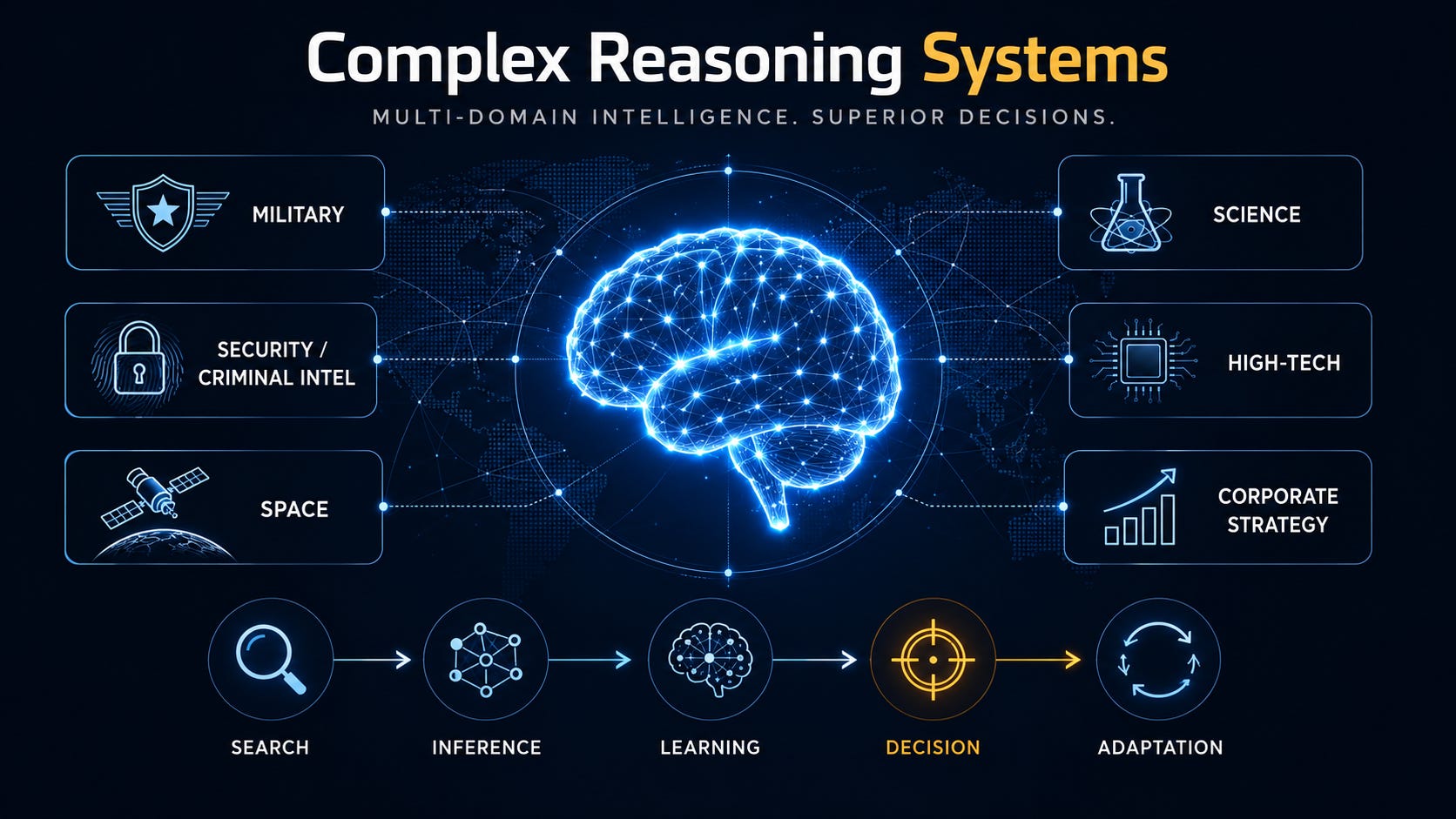
Figure 5 — Multi-domain reasoning.
The value of complex reasoning lies in its capacity to connect weak signals, models, hypotheses, and decisions across domains that normally remain separated.
Closing
The future of artificial intelligence will not be defined only by larger models.
Nor only by faster computation.
Nor only by more data.
It will be defined by the capacity to design systems that can reason under complexity.
Systems that can link models, sub-models, techniques, agents, evidence, objectives, constraints, and actions.
Systems that can learn from their own reasoning paths.
Systems that can operate in real time.
Systems that preserve human supervision while expanding the cognitive reach of organizations.
This is the promise of Complex Reasoning Systems.
Not artificial intelligence as a tool.
Artificial intelligence as reasoning infrastructure.
Not automation.
Smartification.
Not isolated intelligence.
Adaptive multi-domain reasoning.
And in the age of complexity, that may become the decisive advantage.